With the regular season ending in under two weeks, most teams have played somewhere in the vicinity of 25 matches. We’ve seen many familiar faces continue to perform at a high level, while others have stepped up into an elevated role or are making their mark as a freshman. Based on match outcomes and statistics, I’ve put together my predictions for the ACC's post-season honors.
Individual Awards
ACC Co-Players of the Year: Olivia Babcock, Pittsburgh and Flormarie Heredia Colon, Miami
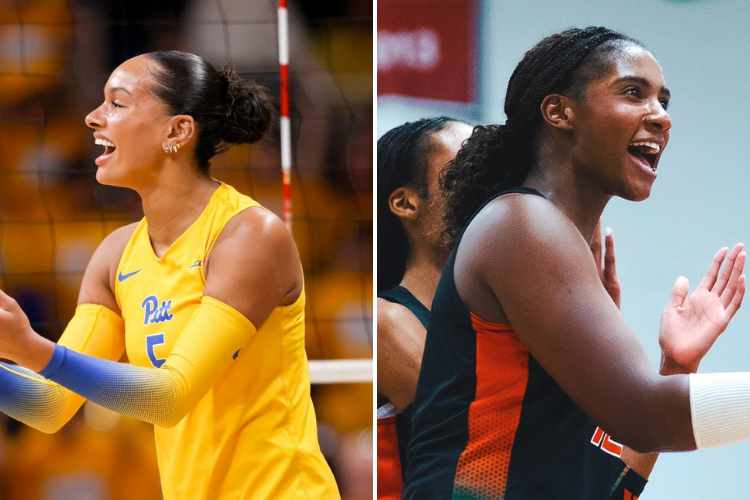
Is there really any other choice but to give this award to both Olivia Babcock and Flormarie Heredia Colon? What both of them have been able to do this year has been nothing short of astounding. As the only two players in the country with 40 or more kills in a match this season (which both have achieved multiple times), both Babcock and Heredia Colon have proven they can pull their teams across the finish line even with their backs against the wall.
With outside hitter Torrey Stafford having transferred to Texas during the off-season, the load that Babcock has had to carry for her team has only increased, and she has more than risen to the occasion. Despite taking more swings, her hitting percentage has remained about the same (currently .320 vs. last year’s .323). And at 5.05 kills per set, she’s averaging a third of a kill per set more than last year when she won National Player of the Year.
Babcock’s ability to score points in the toughest situations is extremely impressive, but her offense isn’t the only thing that stands out. Her floor defense—which was never bad to begin with—has improved dramatically, with her digs per set now at 2.15 compared with last year’s 1.82. To put that in perspective, she’s only eight digs away from matching her total digs last year, despite having played in 21 fewer sets.
And then there’s Heredia Colon, who leads the conference and the country in kills and points per set. She led her team to an upset of Pitt with a whopping 38 kills, and then followed that performance up a month later with 42 kills against Florida State. She then beat her own record again by posting 43 kills in Miami’s five-set loss against Louisville. While Babcock’s hitting percentage is markedly higher than Heredia Colon’s (still solid) .292, Heredia Colon has had 30 or more kills in seven matches this season, which is frankly incredible. She’s also dialed up her (already strong) service pressure this season, with just under half an ace per set.
While I would say Babcock is unquestionably the more well-rounded of the two players at this point in their careers, the impact that Heredia Colon has had for Miami is undeniable. I wouldn’t be especially surprised if the award goes to just one of them, but I hope both of them get the recognition they deserve.
ACC Freshman of the Year: Kalyssa Blackshear, Louisville
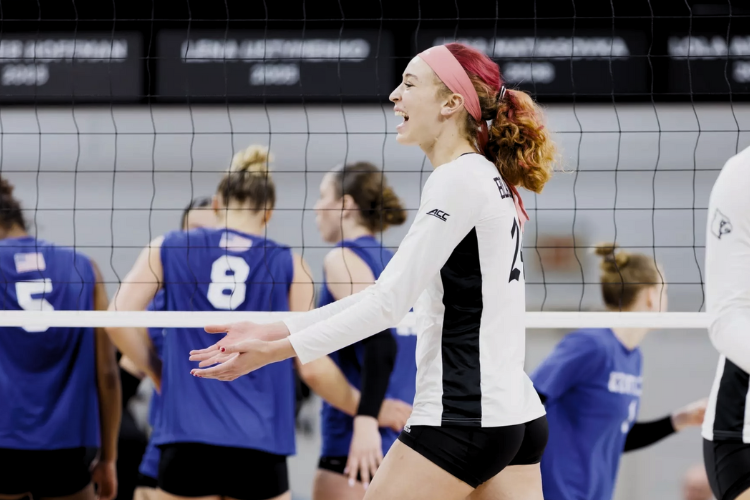
Due to the number of impactful freshmen in the ACC this year, there are a number of different directions for this award to go in. Originally, I had Stanford’s Erika Sayer as my prediction, but she’s been struggling in recent matches to the point that I think Kalyssa Blackshear has the edge.
Despite being recruited as a middle blocker, Blackshear has played exclusively on the right side since joining Louisville, and she’s done an excellent job. Thanks to her strong offense and blocking, she’s currently second on the team for points per set with 3.47 (which isn’t at all far behind Payton Petersen’s leading 3.52 points per set). With double-digit kills in 15 matches, she’s been Louisville’s leading scorer in seven of their matches—an especially impressive feat considering she only plays in front row rotations. If she can expand her skill set over the course of her career to enable her to contribute from the service line and back row as well, she’s going to be a massive weapon by the time all is said and done in her NCAA career.
ACC Setter of the Year: Averi Carlson, SMU
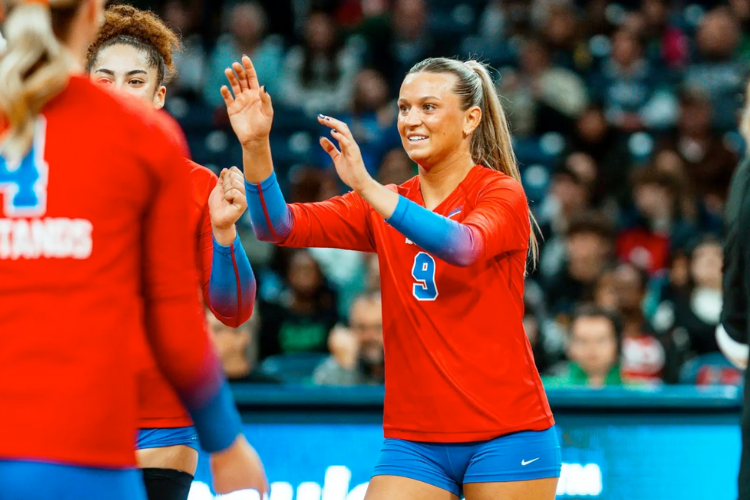
Considering she’s won ACC Setter of the Week six times this season, it seems pretty unlikely that this award goes to anyone other than Averi Carlson. With just over 11 assists per set, Carlson leads the ACC and is second in the country, and she’s been setting her team to the fifth-best hitting percentage in the NCAA at .307. Beyond that, her all-around game is elite, with her being one of the best defensive setters in the ACC both in terms of blocks and digs per set.
ACC Defensive Player of the Year: Cara Cresse, Louisville
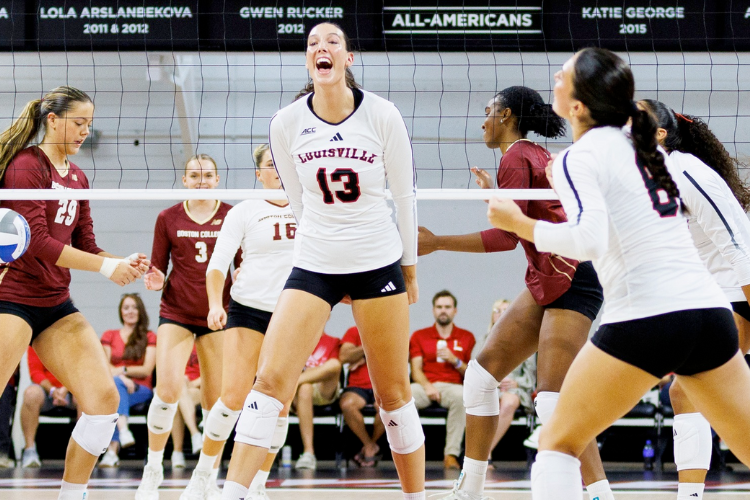
This award is a tough one, because it could go to either a libero or to a middle blocker. I actually initially had Cara Cresse’s teammate Kamden Schrand as my prediction, but I think Cresse’s numbers are too good to ignore.
While it’s Cresse’s teammate Hannah Sherman who leads both her team and the conference in blocks per set with 1.51, I’m giving the edge to Cresse for her all-around game and because she’s won Defensive Player of the Week three times this season. Notably, Cresse tied her own Louisville program record early in the season with 14 blocks against Texas. And while the award is primarily based on defense, Cresse’s offensive contributions to Louisville mean that she averages over 3.3 points per set.
Cresse winning this award would not only be a fitting way to end her NCAA career, but also a continuation in the streak (currently three years in a row) of Louisville players winning Defensive Player of the Year.
ACC Coach of the Year: Sam Erger, SMU
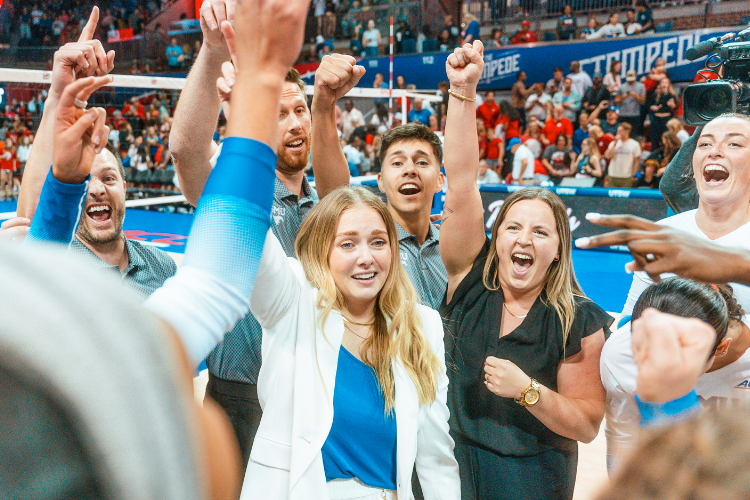
In her fourth year with the Mustangs, Erger has led the team to its highest-ever national ranking of #7. Under her leadership (and with no shortage of help from the transfer portal), SMU has become known as a team that can upset just about anyone, thanks to the team’s sweep of Nebraska early in the 2024 season as well as being the only team to take down #1 Pitt in the regular season. This season, SMU defeated Texas A&M in a dominating sweep, took down then-fourth ranked Louisville in a five-set battle, and most recently defeated #5 Stanford in five sets. For a team that wasn’t on anyone’s radar as a true national threat as little as two years ago, Erger has done a remarkable job turning SMU into a serious contender.
All-Conference Teams
The ACC typically sticks to 14 players on both teams, and while ties in voting have resulted in 15 players being named to either list, I limited myself to 14 as well.
First Team All-ACC
- Iane Henke, OH, Florida State
- Bianca Garibaldi, MB, Georgia Tech
- Cara Cresse, MB, Louisville
- Chloe Chicoine, OH, Louisville
- Nayelis Cabello, S, Louisville
- Flormarie Heredia Colon, OH, Miami
- Safi Hampton, OH, North Carolina
- Morgan Gaerte, OH, Notre Dame
- Bre Kelley, MB, Pittsburgh
- Olivia Babcock, OPP, Pittsburgh
- Averi Carlson, S, SMU
- Malaya Jones, OPP, SMU
- Elia Rubin, OH, Stanford
- Lizzy Andrew, MB, Stanford
I feel pretty confident in this list, though I can see Morgan Gaerte of Notre Dame being bumped down to the second team due to both Notre Dame’s record and her digs per set numbers not being as high as others. It upsets me not to have a libero on this list, but since no liberos have the numbers Elena Scott did when she was the sole libero included on the First Team, I don’t see any making the cut. I would love to be proven wrong!
Second Team All-ACC
- Audrey Ross, OH, Boston College
- Kyleene Filimaua, OH, Florida State
- Kalyssa Blackshear, OPP, Louisville
- Kamden Schrand, L, Louisville
- Payton Petersen, OH, Louisville
- Ariana Rodriguez, S, Miami
- Chelsea Thorpe, OPP, North Carolina
- Maddy May, L, North Carolina
- Brooke Mosher, S, Pittsburgh
- Favor Anyanwu, MB, SMU
- Jadyn Livings, OH, SMU
- Erika Sayer, MB, Stanford
- Julia Blyashov, OH, Stanford
- Logan Parks, S, Stanford
I feel less confident about the Second Team—it’s always a possibility that a chunk of players I have on the First Team will actually land here (and vice versa), and there’s not always a clear rationale for certain players making it over others. Team performance still matters to a degree, as Cal’s Maggie Li didn’t make a team last year despite being fourth in the conference for points per set. With that being the case, it’s possible that Audrey Ross may not make the list due to Boston College’s record, but I felt compelled to include her based on her stats.
Additionally, it may seem strange to have Payton Petersen on the Second Team whereas Chloe Chicoine is on the First Team despite Petersen leading the team in points per set. But with almost three digs per set and a higher hitting percentage, I expect that Chicoine’s all-around game will give her the edge.
Other than that, the biggest question mark is Jadyn Livings, as she’s been injured and had to miss several matches over the past month. It does seem she’s being integrated back into the lineup now, however, so assuming that she continues to play at the level she was prior to her injury, I think she’s a safe bet.
All-Freshman Team
- Anna Fiedorowicz, OH, Georgia Tech
- Lameen Mambu, OH, Georgia Tech
- Kalyssa Blackshear, OPP, Louisville
- Rebecca Ring, OH, NC State
- Kennedi Rogers, OH, SMU
- Erika Sayer, MB, Stanford
- Logan Parks, S, Stanford
- Spencer Etzler, L, Stanford
- Reagan Ennist, OH, Virginia
This team seems to always have nine members, so I stuck with that. Additionally, hitting percentage doesn’t seem to matter quite as much as points scored when it comes to freshman outside hitters being included on this list, so that helped narrow my focus somewhat. The one player I left off this list who I could see making it is Duke’s Ashby Zubchevich, who leads her team with 3.62 points per set, but Duke’s record this season has been, well, abysmal, so I thought the voters would be more inclined to overlook her.