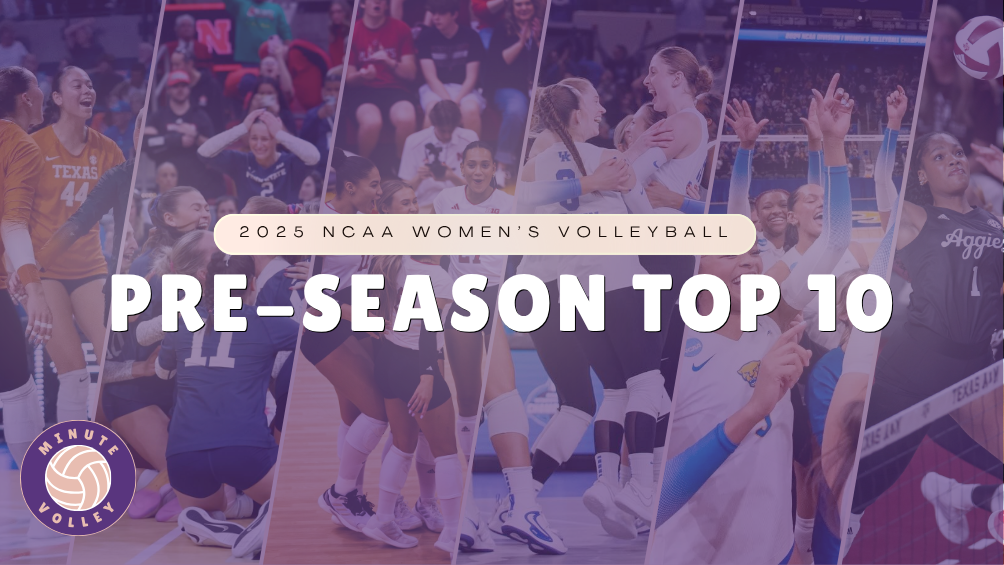
The time has come.
For me, putting together a pre-season list is difficult under normal circumstances. Considering the absolute insanity that was this past off-season, the task is even more of a challenge. Between the deluge of shocking transfers and jaw-dropping coaching changes, it’s safe to say that the NCAA volleyball landscape looks quite a bit different than it did in December.
Still, even with the many, many changes that took place between the 2024 post-season tournament and now, there are some obvious favorites emerging. I want to say that there are only a handful of teams that I could see winning it all—but then again, I didn’t have Penn State on my title-winning radar last year, and look how that turned out.
So, while I fully expect to look back at this list in December and laugh, here is where my head’s at as we get closer and closer to First Serve.
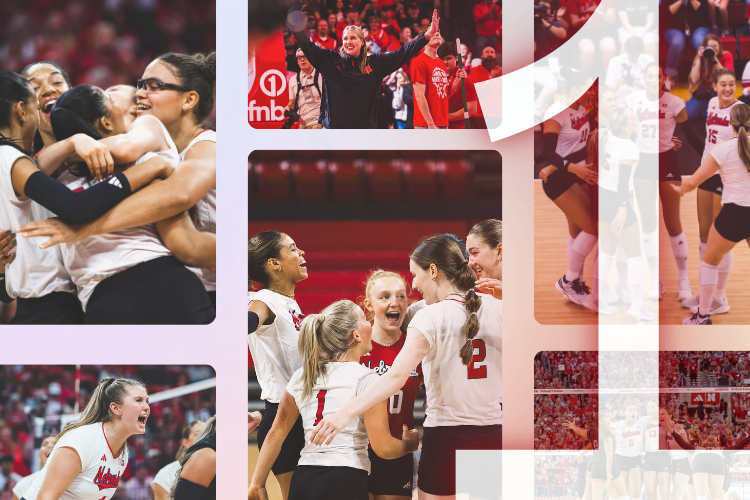
#1 - Nebraska
Is there really any other choice? It’s been said for years now, but I’ll say it again: this season is Nebraska’s to lose. John Cook was a legendary coach, but Dani Busboom Kelly’s style is poised to breathe fresh air and new life into this extremely talented group of players. Beyond that, the eye-watering depth that this Husker team has at every position is simply unparalleled by any other team. How these various players—some returning, some new—will work together on the court is yet to be seen (outside of a few promising spring matches), but if they can figure that part out, Nebraska may well be unstoppable.
Biggest Strengths:
- Balanced offense and relentless defense.
- Strength in the middle, especially with the phenomenal Andi Jackson.
- Italian opposite Virginia Adriano has experience playing—and performing well—in arguably the best professional volleyball league in the world. If she lives up to the hype, her highlight reels may rival those of Moni Nikolov’s from this most recent men’s NCAA season.
Potential Hurdles:
- Finding the right lineup among all the talent may be a challenge, but it’s a good problem to have.
- Though the team doesn’t appear to have skipped a beat under Busboom Kelly, there’s always a chance that adapting to a new head coach and coaching style could present issues.
- Players letting the pre-season hype get to their heads. I’m not saying this is happening, but rather that it could pose a risk.
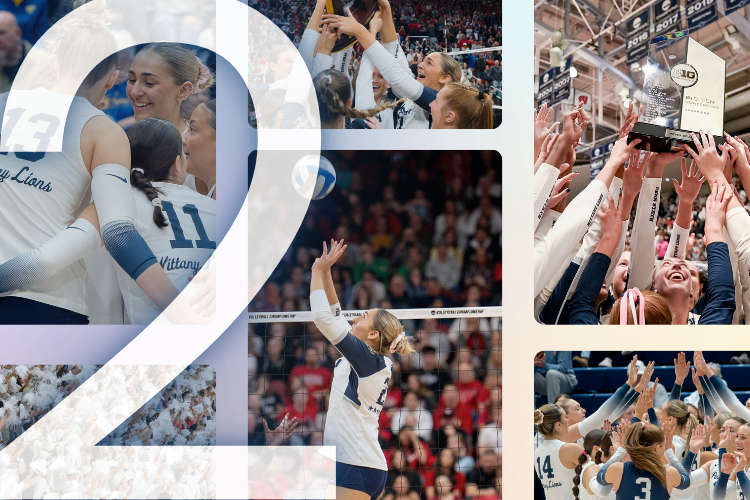
#2 - Penn State
The reigning national champions may have said goodbye to their top points scorers in Jess Mruzik, Taylor Trammel, and Camryn Hannah, but incoming transfer Kennedy Martin and her 6.28 points per set last year sure look poised to make up for it. Along with standout setter Izzy Starck leading the offense and Gillian Grimes running the backrow, the Nittany Lions are primed to have yet another strong year. Whether or not that translates into a back-to-back title comes down to the less proven aspects of this team: namely, the starting outside duo that will presumably consist of Ohio State transfer Emmi Sellman and Caroline Jurevicius. While both had excellent showings in specific matches last year (Sellman’s 27 kills against Penn State undoubtedly captured the attention of her now-head coach), neither seemed able to consistently play at the top of their game. Let’s see if Katie Schumacher-Cawley can get that part in check and make this Penn State team another tough one to beat.
Biggest Strengths:
- Izzy Starck dishing to Kennedy Martin - need I say anything more about this?
- Gillian Grimes is an excellent libero who may just get her chance to shine as top libero this year with Lexi Rodriguez and Elena Scott both having graduated.
Potential Hurdles:
- Left-side production if Sellman and Jurevicius can’t be consistently solid.
- Passing: outside of Grimes and maybe Ava Falduto, I wouldn’t say anyone on this team is a particularly outstanding receiver.
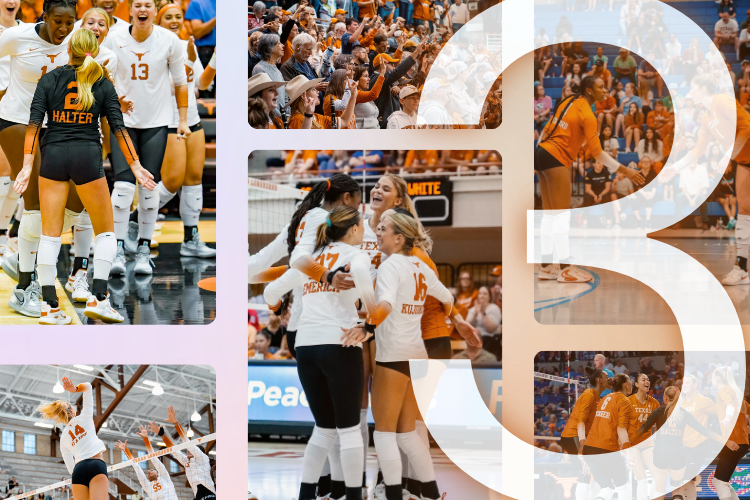
#3 - Texas
After winning two back-to-back national titles, I doubt anyone could have predicted just how unremarkable the Longhorns would end up being last season. Inconsistent setting, lack of offensive production, and passing woes plagued an otherwise solid group of athletes, who ended up losing in the third round of the tournament (in fairness, to a very strong Creighton squad). This year, however, Texas has an immensely strong lineup and a chip on their shoulder—one that should scare teams in the SEC and beyond. The highlight of this team is undoubtedly Pitt transfer Torrey Stafford, who brings much-needed reception skills as well as phenomenal offense. It’s unclear who of Ramsey Gary and Emma Halter will earn the libero jersey, but either way, that’s another plus in the passing column, which opens the Longhorns up to run a much more balanced offense. Add in some very promising freshmen talent, and Texas should be making a much stronger case for itself this year.
Biggest Strengths:
- Torrey Stafford is an exceptional outside hitter in all facets of the game.
- The incoming freshman class, consisting of players like Cari Spears and Abby Vander Wal, is stacked with talent.
- Whitney Lauenstein should be available this season, offering depth on the right side.
Potential Hurdles:
- Assembling the right lineup and finding chemistry on the court.
- Setting consistency.
- Passing—even though there are good passers on the lineup, Texas isn’t exactly known for its stable reception.
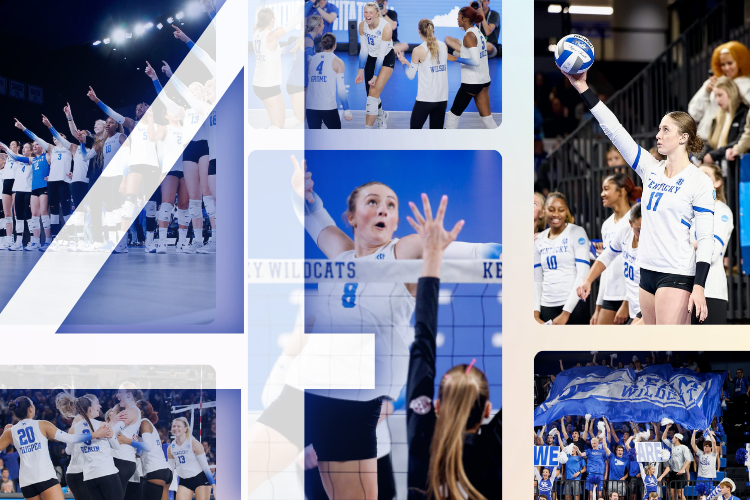
#4 - Kentucky
Since winning the program’s first-ever national championship in 2021, Kentucky has remained a solid team, but hasn’t quite managed to recapture that success. Last year’s tournament showed a shift in momentum, as the Wildcats made it further in the tournament than they had in the three previous seasons, losing to top-seeded Pitt in the regional finals. Now, with star hitter Brooklyn DeLeye returning and the addition of Eva Hudson, who last year led the Big Ten in kills per set at Purdue, Kentucky is not to be overlooked. While it’s unclear who will be the starting setter and how well they will be able to replace Emma Grome, Kentucky has a great libero in Molly Tuozzo and the energetic Brooke Bultema in the middle to help round out a burgeoning team.
Biggest Strengths:
- Entering the season, Hudson and DeLeye are the best outside hitter duo in the country.
- Passing should be solid, which will enable running plenty of offense through Bultema in addition to the strong outsides.
Potential Hurdles:
- Putting it nicely, the setting situation didn’t exactly appear to be resolved in the spring match against Louisville.
- Bultema’s attacking is excellent, but she can sometimes disappear from a blocking perspective.
- Right-side production.
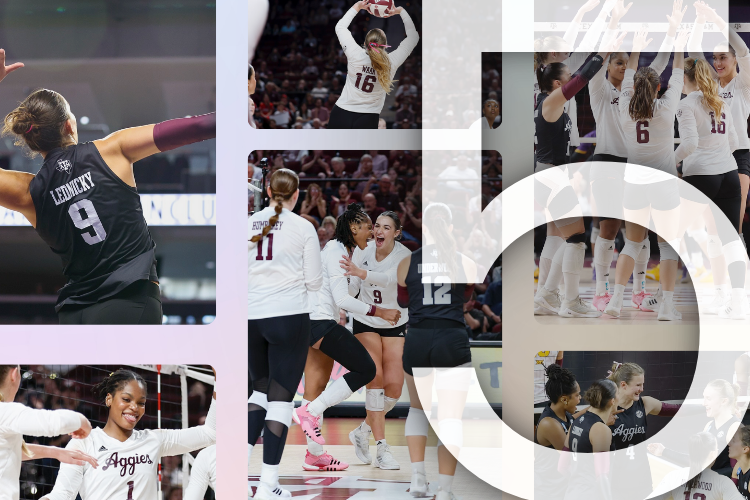
#5 - Texas A&M
Never has there been a greater opportunity for Texas A&M to make a tournament run than this one. After defeating Texas in their home gym and then nearly upsetting Wisconsin in a five-set battle during last year’s round of 16, it was clear that the Aggies, who return their entire starting lineup this year, were going to be a major force. Opposite hitter Logan Lednicky is a star in the making, as evidenced by her inclusion on the Volleyball Nations League roster this summer, and middle blocker Ifenna Cos-Okpalla is fresh off of an MVP performance at the U23 Pan American Cup. Like Penn State, however, the biggest question mark for the Aggies comes down to their outsides, who have struggled to be consistently terminal in their attacking.
Biggest Strengths
- Logan Lednicky’s dynamic offense.
- Blocking and middle production; Ifenna Cos-Okpalla gets the majority of the attention, but fellow middle Morgan Perkins is no slouch.
Potential Hurdles:
- Outside production; Emily Hellmuth and Taylor Humphrey both hit below .170 on the season last year. Incoming Baylor transfer Kyndal Stowers may be able to right the ship.
- Lack of service pressure.
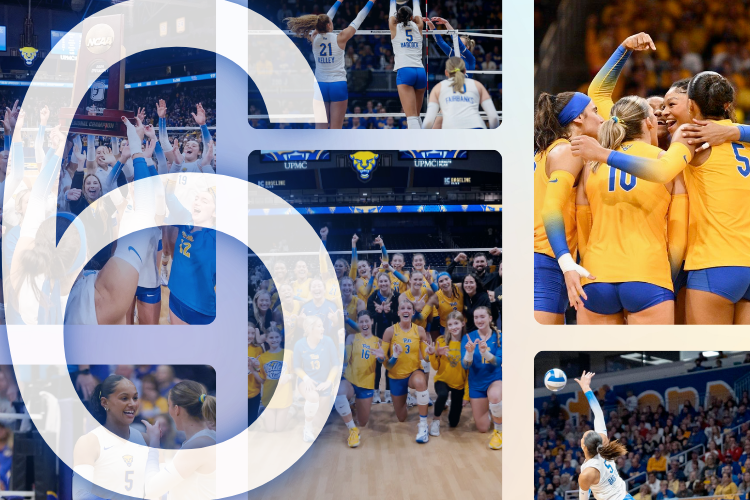
#6 - Pittsburgh
After being ranked #1 for virtually the entire 2024 season, Pitt said goodbye to some of its key players, including setter Rachel Fairbanks, libero Emmy Klika, and outside hitter Torrey Stafford, who transferred to Texas. While these are tough losses, what Pitt still has that other teams don’t is the reigning National Player of the Year, Olivia Babcock. Babcock, like Texas A&M’s Lednicky, played with the senior U.S. national team at the VNL this summer, and was the youngest player to do so. In her junior year, she’ll likely have to take even more swings now that Stafford won’t be on the other pin, but coach Dan Fisher has added some transfers and international talent that may surprise. Beyond Babcock, Pitt also has one of the best middles in the country in Bre Kelley, whose .497 hitting percentage and 1.49 blocks per set were vital to the team’s success last year.
Biggest Strengths:
- Olivia Babcock. Her offense at the net is but one facet of her impressive all-around game. Her nasty serve, fantastic blocking, and solid defense all add a lot on their own.
- Bre Kelley and Ryla Jones make for one of the best middle duos in the country.
- Dan Fisher as a coach certainly doesn’t hurt—though some of the faces he makes on the sideline when his team makes errors sure look like they could kill.
Potential Hurdles:
- Replacing Rachel Fairbanks’ setting, at least right away, is a nigh impossible task. Her ability to get the ball to the right pin from virtually anywhere on the court was a key part of making Babcock’s offense work, and if Illinois transfer Brooke Mosher or redshirt sophomore Haiti Tautua'a can’t reproduce that, things may get sticky.
- Passing. The only returning pin passer is Blaire Bayless, whose reception, while not tragic, wasn’t up to the standard that Stafford set.
- Finding the right lineup with all the new pieces.
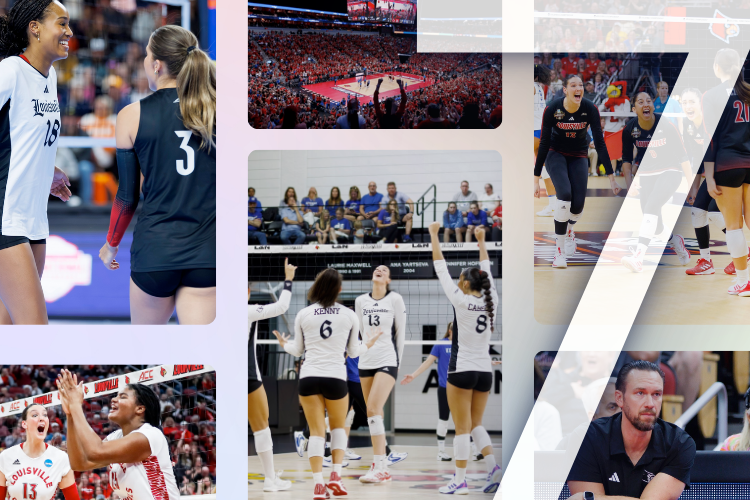
#7 - Louisville
In the past three seasons, Louisville has twice been the bridesmaid but never the bride. Coming off of their runners-up performance, the Cardinals have said goodbye to a lot of talent (including coach Dani Busboom Kelly), but added some key replacements in the same breath. Notably, Purdue transfer Chloe Chicoine looks poised to be the latest in a growing line of undersized outside hitters who lead Louisville’s offense. In addition to the promising Payton Petersen, who sure had her unexpected moment in the spotlight during the national semifinals, Louisville returns the excellent young setter Nayelis Cabello as well as a superb middle blocking duo in Cara Cresse and Hannah Sherman.
Biggest Strengths:
- This isn’t the most scientific of observations, but Louisville just seems to click every year despite expectations not always being high. Obviously coach Busboom Kelly had something to do with that, but Dan Meske has been a part of that equation for long enough to make me think he can help do the same.
- As is the case (nearly) every year, Louisville is primed to be one of, if not the best, blocking teams in the nation.
Potential Hurdles:
- Losing the offensive production of Anna DeBeer, Charitie Luper, and Sofia Maldonado Diaz all at once has to sting, even if the replacements are all solid.
- Right-side production. Reese Robins looked poised to take over the spot in a 5-1, and while she’s generally solid (if a bit inconsistent), it’s unclear how she’ll do when she’s in the role full-time.
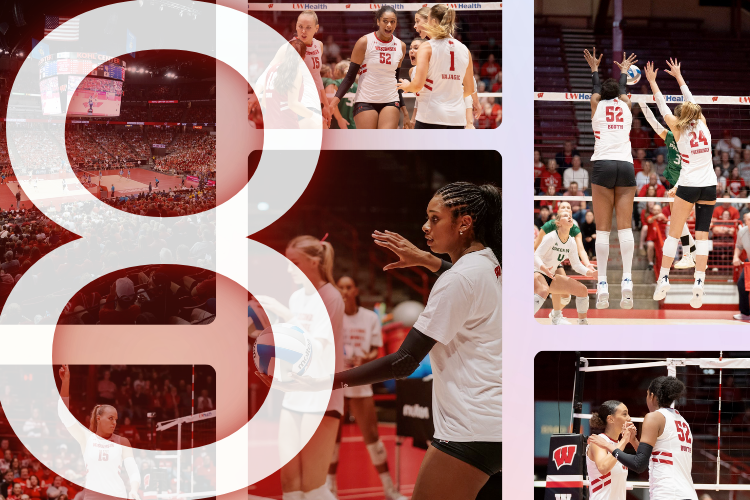
#8 - Wisconsin
It’s crazy to think there was ever a five-year stretch that Wisconsin didn’t make it to the tournament. Since Kelly Sheffield took over as head coach in 2013, the Badgers have made it at least as far as the round of 16 in every single tournament. While there were many departures—2023 National Player of the Year Sarah Franklin being the big one—I don’t see this season being any different. There are many new and emerging faces ready to fill their predecessors’ shoes, such as Oregon transfer Mimi Colyer, who looks poised to be Franklin’s replacement. And though three of last year’s liberos/defensive specialists left via the transfer portal, incoming freshman Aniya Warren was ranked the top libero in her class.
Biggest Strengths
- Outside production. Though it’s yet to be seen who Mimi Colyer’s counterpart will be, there are several solid options, including Una Vajagić, who has pro experience in her home country of Serbia.
- The Badgers have a solid incoming freshman class, including the aforementioned Warren as well as Madison Quest, who looked quite impressive in her spring match appearances despite playing out-of-position on the right side.
- Carter Booth brings stability in the middle both offensively and defensively.
Potential Hurdles:
- Passing; Mimi Colyer’s reception stats aren’t the best and certainly aren’t anywhere near the standard set by Franklin.
- Right-side production if Quest’s success as an opposite during spring matches was a fluke.
#9 - Stanford
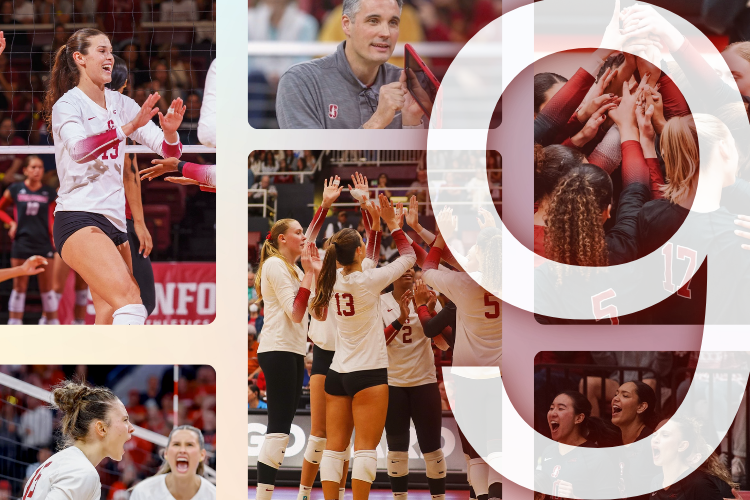
It’s hard to know what to make of Stanford this upcoming season. Even with the incredible Kami Miner as setter, the nine-time national championship-winning program hasn’t been able to reproduce the success they enjoyed in the late 2010s. Now, with libero Elena Oglivie having graduated along with Miner, many question marks remain. Of course, there is still ample talent on the team; Elia Rubin is returning for her senior year, and if the upward year-over-year trajectory of her offensive output is any indication, she’ll be better than ever. There’s also Ipar Kurt and Lizzy Andrew, both of whom had solid showings as freshmen.
Biggest Strengths
- Outside production won’t miss a beat, with both of last year’s starters returning and Julia Blyashov emerging as an option now that her redshirt year is over.
- Passing; Rubin is one of the best returning pin receivers in the country.
Potential Hurdles:
- Right-side production. Jordyn Harvey was fun to watch last year and had flashes of greatness (such as her 18-kill performance in the late-season win against Louisville), but whether she can bring that consistently remains to be seen.
- Service “pressure” gone wrong. While coach Kevin Hambly doesn’t mind service errors, as commentators make sure to let viewers know during every match, the inability of Stanford to get their serves in last year undoubtedly cost them key set and match wins, if only because it killed any building momentum the team cooked up. The Cardinal had two service errors for every one ace, and for all that weren’t even top 50 in the nation for aces per set.
#10 - Missouri
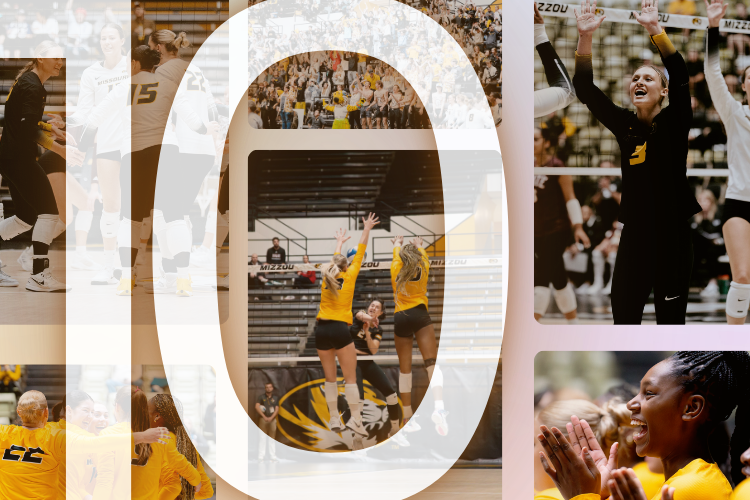
In just two years, head coach Dawn Sullivan has helped Missouri turn things around in a big way. After a terrible 2022 season, in which the Tigers went 9-19 and won only two matches in their conference, Missouri changed things up for the better. Most recently, Missouri reached the third round of the tournament after upsetting the second-seeded SMU. Now, with high impact transfers such as Caylen Alexander and Tyrah Ariail coming to the team, Mizzou might be poised for its best finish in years—or maybe ever.
Biggest Strengths:
- Setter Marina Crownover is excellent, and should be able to make great use of some of the new talent on the team.
- Backrow defense; Maya Sands leads all liberos from Power 4 conferences in digs per set with 4.53.
Potential Hurdles:
- From my view, success hinges on whether or not Caylen Alexander can reproduce her outstanding offensive output in a new (and more competitive) conference.
- With Jordan Iliff having graduated, it’s unclear who is going to take on the right-side duties and how well they’ll do.
- Blocking was a weakness of this team’s last year, with only 1.78 blocks per. USC transfer Ariail should hopefully be a big help here.
On the outside looking in:
Quite honestly, I think that anything beyond the top five or six teams could be one big toss up between the remaining teams on my top ten list and those that I consider just outside of it. In alphabetical order, those are:
- Florida: Mary Wise retired and Kennedy Martin transferred out, but the sun can still shine for Florida. Standout setter Alexis Stucky, who has hopefully had ample time to truly recover from her 2023 knee injury, has plenty of solid hitters to choose from, including the reigning SEC Freshman of the Year, Jaela Auguste.
- Kansas: New head coach Matt Ulmer probably won’t lead Kansas to the final four in his first year with the team, but there’s a lot of upside for this new Jayhawks squad. Setter Cristin Cline, also from Oregon, doesn’t appear to have missed a beat in her command of the offense, and there are many promising hitters on the squad, including middle Reese Ptacek and incoming freshman Logan Bell. There’s also the addition of international opposite Jovana Zelenović, whose 6’7” stature and success playing in the Serbian league will doubtlessly come in handy.
- Minnesota: Keegan Cook hasn’t quite been able to recreate the magic of Hugh McCutcheon’s era, but it’s only been two years. The Golden Gophers have no dearth of talent, with outside Julia Hanson emerging as a strong offensive option last year. Stella Swenson is also taking over setting duties, and she’s been very impressive in her outings with the USA U21 team this summer.
- SMU: After reaching the highest national ranking in program history (#10) and upsetting the #1 and #2 teams during the regular season last year, SMU replenished its departing roster with a host of talent from all around the country. Setter Averi Carlson from Texas and opposite hitter Malaya Jones from Colorado State are likely to be stars of this team.
- UCLA: While the Bruins have enjoyed plenty of volleyball success on the men’s side in recent years, it’s been a long time since UCLA was a dominant force in the women’s game. In his third year as head coach, Alfee Reft seems determined to right the ship given the caliber of players he’s transferred in. Texas’ Marianna Singletary, Louisville’s Phekran Kong, and Cal’s Maggie Li are three such incoming players who, if they can recreate or build on the success they’ve enjoyed so far, will be monumental for the Bruins.